This post may contain affiliate links. If you purchase through these links, I may earn a small commission at no extra cost to you. Thanks for supporting my site! See our privacy policy for more information.
I would describe myself as an anxious packer. Here are the demands I place on myself with every trip:
- An outfit for every day, some backup shirts in case I spill coffee, which is both unfortunate and alarmingly common, especially when I’m wearing white.
- A workout outfit and shoes, because what if I want to go for a run?
- I also don’t want my suitcase to be barely closable or feel like I have no space. I am a maximalist packer who wants to fit into a minimalist bag. The fact that my favorite Away bag claims it fits five to six outfits is laughable. Five to six outfits for whom? A cartoon character with no range?
So when it came time to pack for three weeks in South America, including five days of backpacking clothes meant to accommodate every season, because yes, you really can see everything in Torres del Paine, the stress level was high. But through thorough and detailed planning, I actually packed nearly perfectly for Patagonia.
Read on to find out what went on my Patagonia W-trek packing list and, maybe more importantly, what was left behind.
The Plan
We visited Patagonia during February and planned to backpack for 5 days as well as have some city time in Santiago to round out the trip. Overall, the plan was:
- Fly to Puerto Natales
- Hike the W-Trek over five days
- Pick up a rental car and drive to El Calafate
- Drive to El Chaltén
- Drive back to Puerto Natales
- Fly to Santiago
- Fly home
Ready to Explore? Book Here ↓
The itinerary looks simple and straight to the point. Our total time away was 18 days. But here were the factors we had to consider:
- Needed gear for all seasons. You should expect nearly everything on the W-Trek except snow, depending on the season.
- Clothes for walking around Santiago, which was going to be warm (and I wanted to look cute!)
- Travel clothes for long flights and bus rides.
- Space. Not only did I need to pack clothes, but gear as well for camping and the bulk of my meals for the trek.
- Car space. We were five girls renting a small crossover-type SUV, and somehow all of our gear had to fit in the trunk.
So with all of those factors combined, packing became the equivalent of solving a 1,000-piece puzzle. But as a type-A, Capricorn planner, this was a task I was more than ready to take on.
The Bag Breakdown
Let’s start with my packing vessels before we dive into what actually filled them.
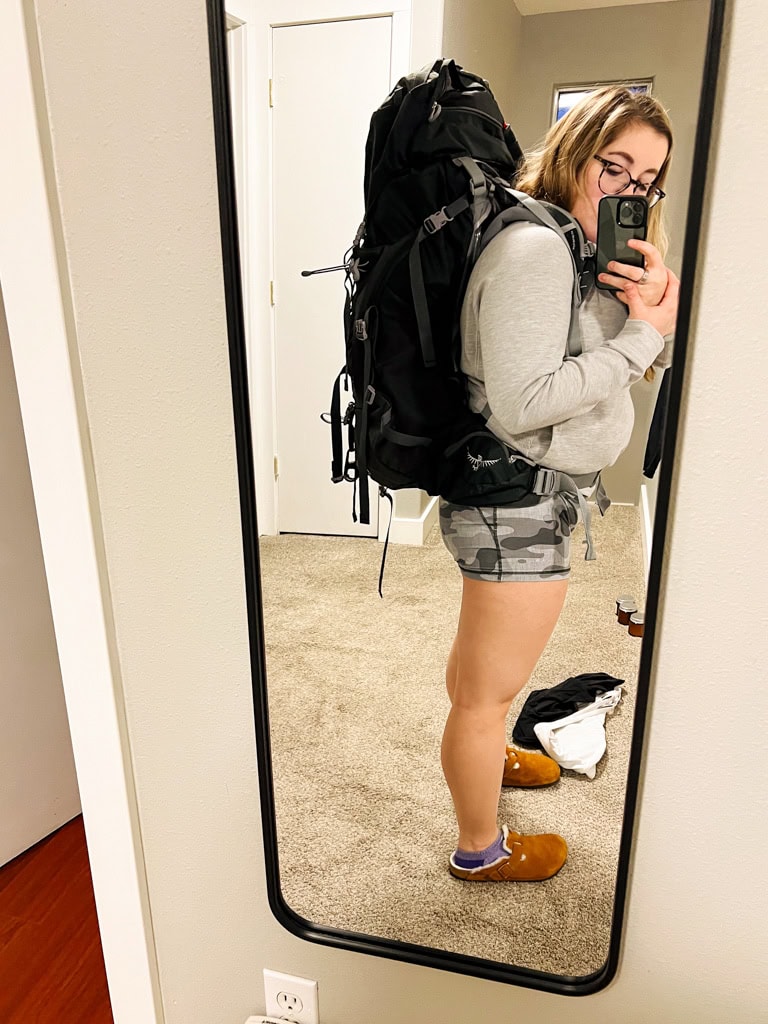
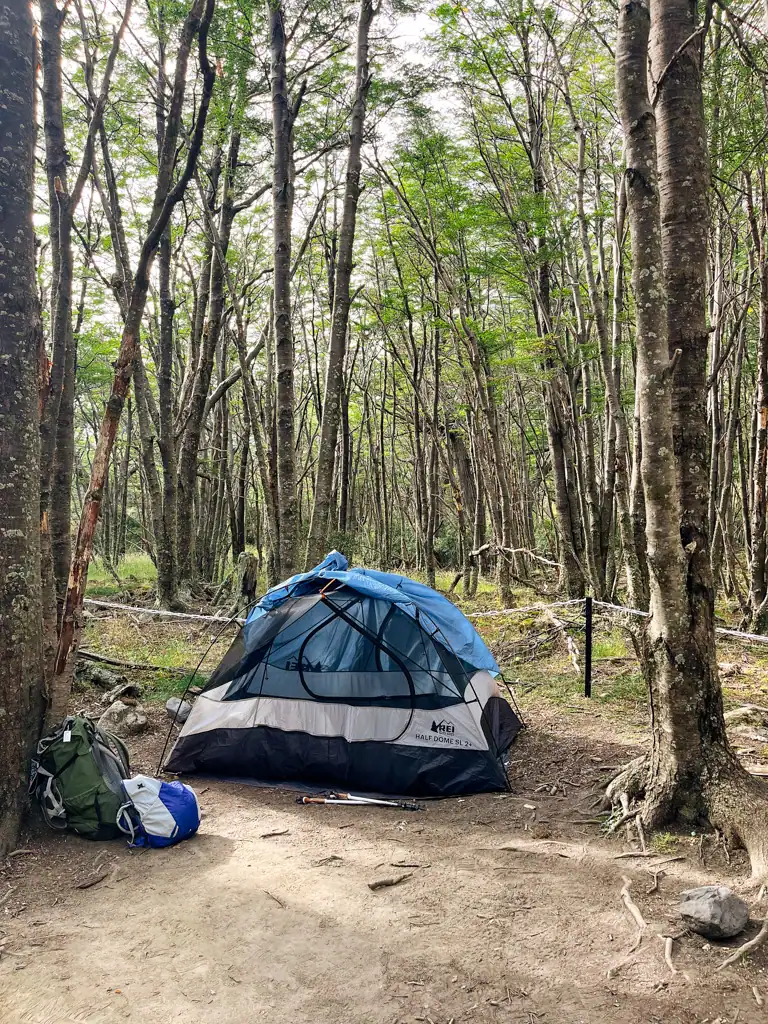
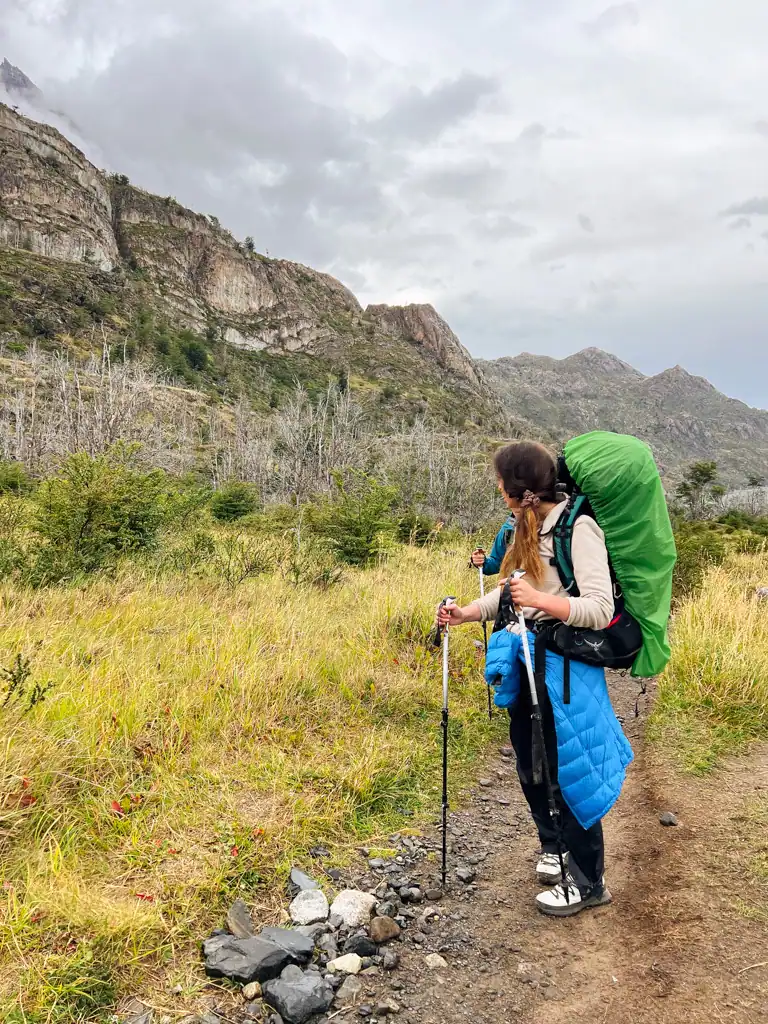
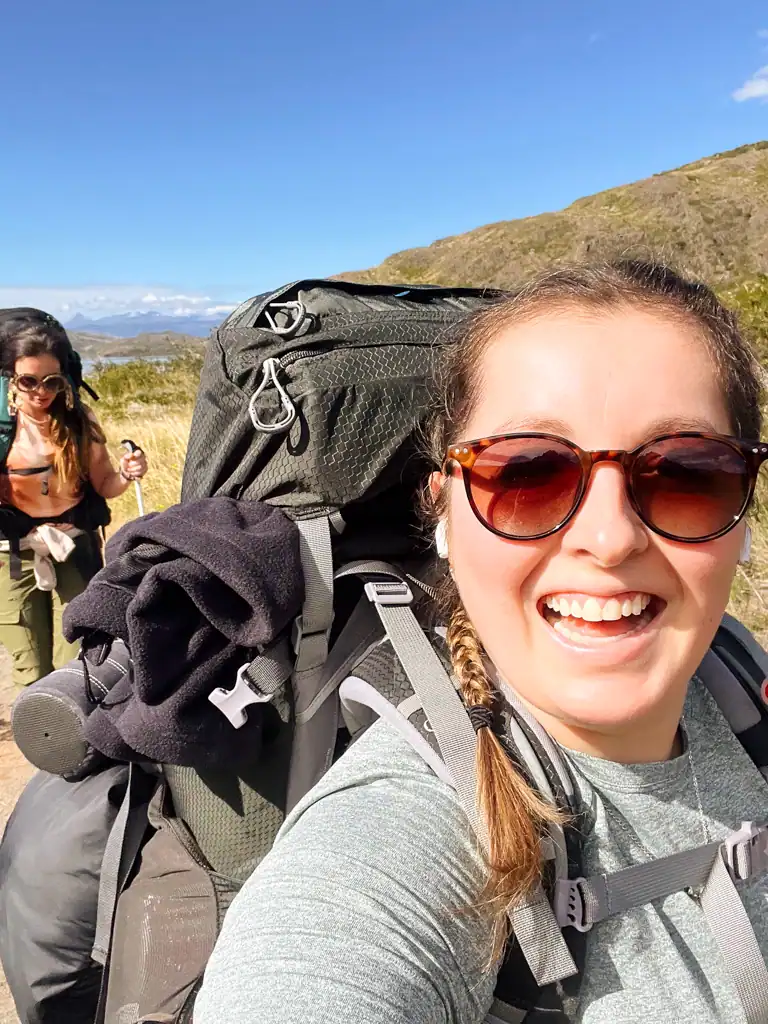
Of course, backpacking required a specific backpack. The most important thing when you are considering buying a pack to trek through the mountains is the fit. I highly recommend visiting an REI and getting properly fitted for a backpack. Be open to buying something you hadn’t originally considered. I am a petite 5’1″, and getting fitted was essential.
Years ago, hiking on Mt. Hood in Oregon, I borrowed a friend’s backpack that left me with bruising all over my sides and a lot of back pain because she had about six inches on me. That experience alone sold me on the importance of getting the right fit. I ended up with the right pack for my frame after trying on a few options at REI, and it made all the difference.
Other things to consider with a backpack: if you are planning on doing day hikes during your trip, consider a bag with a removable top that turns into a daypack. Other than fit and function, a rain fly that comes with the bag is absolutely essential.
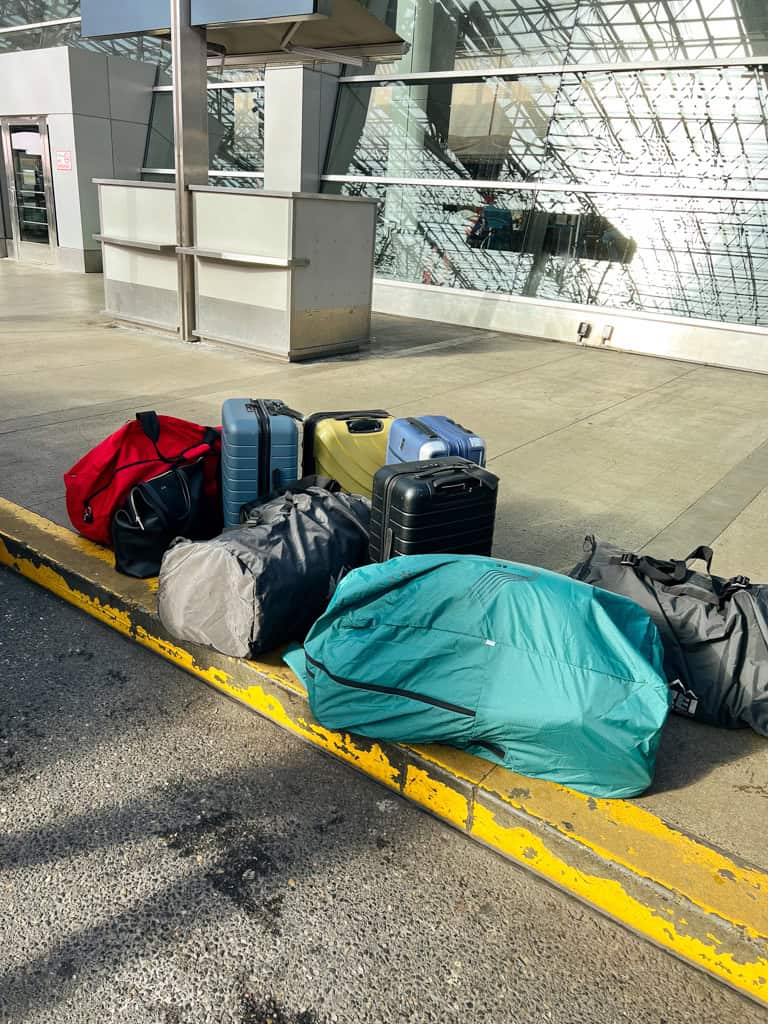
I ended up with the Osprey 55L Ariel Backpack in an extra small/small. Don’t forget you’ll need and want a bag for your bag. You definitely don’t want to send a backpack with all its straps and doo-dads through the checked luggage system. Grab a duffel like this one to protect your bag.
Packing Cubes
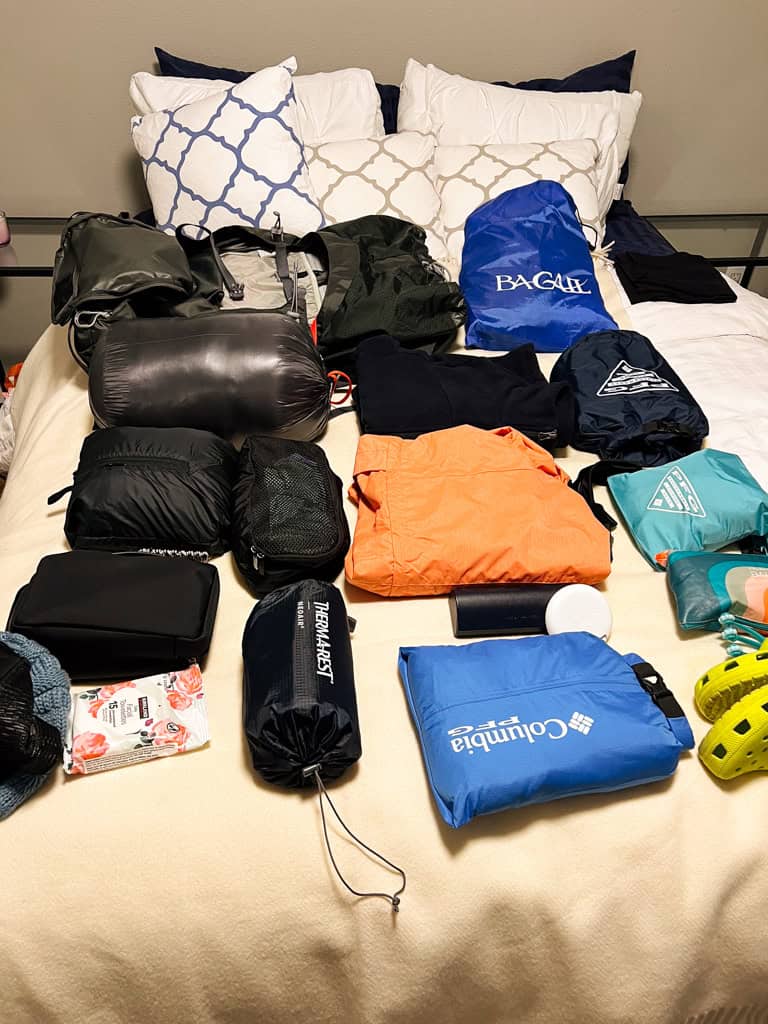
I use packing cubes regularly and somehow now own three different sets of them, which feels excessive but also deeply on brand.
Initially, my in-laws gifted me a starter set, which was perfect. Then I bought the Away packing cubes, thinking that since they were made for the suitcase they would absolutely level up my packing game. Then I got influenced by Instagram and started using compression packing cubes.
Dear God, who needs this many packing cubes?
But here is what I’ve learned about using them:
- Sometimes the small ones are the most valuable. Yes, maybe this little cube only holds five pairs of socks, but having those socks contained in their own neat little world can make the feng shui of your bag significantly better.
- Don’t overfill the cube. Packing cubes are inefficient and not really worth it if you are just jam-packing them full of oddly folded items. The trick is folding and fitting your items to the size of the cube so the shape actually works for you.
- And honestly, having a variety of cubes is the move. While the bag of bags I now own to hold all these cubes is slightly ridiculous, I do love having different sizes and compression options for different types of trips. For optimal packing, diversify your packing cube portfolio.
- I used packing cubes in both my suitcase and backpack. The shape of the cubes in my backpack mattered a lot. I ended up using three of my Away cubes, which helped divide undergarments, camp clothes, and daily hiking clothes.
And now that I’ve talked your ear off about the benefits of packing cubes, I’m also going to recommend that whatever bags you use inside your backpack are actually waterproof. While I used packing cubes, I put my main items in dry bags. I did have a rain fly, but I still wanted to protect my hiking clothes from the elements. Hiking in the rain is hard enough without discovering your supposedly clean clothes are already wet too.
The Away Suitcase
I’m a big apologist for the Away suitcase, and I was thrilled when my friend introduced me to it.
We had registered for beautiful, high-quality, carry-on Samsonite suitcases for our wedding in 2016. And lucky for us, we got them. They were spacious, gorgeous, and the wheels were excellent. Away, frankly, could learn something there.
However, in 2018 in Italy, we were forced to pay and gate-check our bags because they didn’t fit the standard Italia Airways sizing. I wasn’t new to traveling in Europe and knew those airlines could be picky, but I had never had a problem in the past with other bags and backpacks. The key issue was that the Samsonites had soft tops. Yes, a carry-on-sized suitcase can technically fit the dimensions, but anything soft-sided has the opportunity to expand. A hard suitcase doesn’t allow that. It just strains at the zipper. And lucky for me, the Away zipper is basically made of steel.
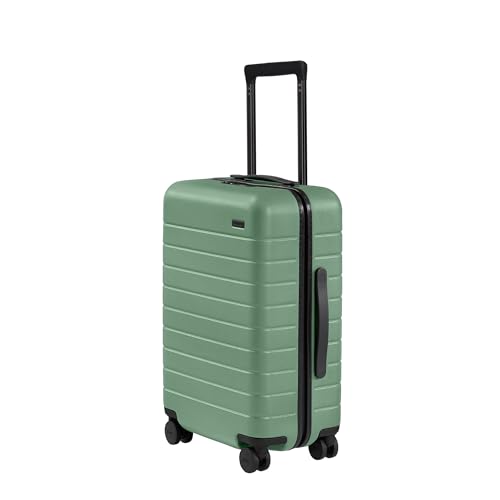
I love my Away suitcase, and the built-in combination lock gives me extra peace of mind when I’m moving between hotels, trains, and airports. The expandable design is also helpful for chronic overpackers like me.
While the wheels leave much to be desired, I have packed for two weeks in NYC in the winter in this suitcase, three weeks in Sicily in the summer, and squeezed in more than I ever thought possible. And the best part? I have never had an airline say my bag was too big.
I was boarding Icelandair once to travel from Oregon to Europe, and the agent said, “Please put your bag in the box to check the size.” I did. She was busy on the computer and didn’t watch. It fit just fine, obviously. I pulled it back out, and she looked up and said, “I didn’t hear it hit the sides.”
Smugly, I replied, “Because it didn’t.” Thank you Away.
What I Packed but Didn’t Need
The number one thing my group brought that I don’t think we truly needed was a camp stove.
Luckily, we all own Jetboils, so the real estate required was pretty minimal. But the only place we actually used it was Paine Grande. Since then, I’ve read that all refugios now have hot water available for those bringing their own meals. We obviously couldn’t pack propane on a plane, so the day before the trek we bopped around Puerto Natales to buy a small canister. We used it once and then left it in a propane donation bin along the trek, about 90% full.
So while it wasn’t overly expensive or wildly space-heavy, it was still kind of unnecessary.
Instead, I would opt for one of these alternatives:
- Pack food that can survive the trek and doesn’t require hot water, like tuna packets, bagels and peanut butter
- Grab a meal or snacks at a refugio. Gray and Paine Grande have camp shops, and places like Cuernos offer hot food
- Have something like cold granola mixed with water for dinner instead
Controversial take: I would also ditch the camp pillow.
To be honest, I bought a nice one from REI that rolled up quite small and had an inflatable side with a foam pad. But it sucked. It wasn’t comfortable, my head bobbed around on it all night while I tried to find the perfect amount of inflation, and it just wasn’t smushy. Yes, smushy is the technical term here.
Instead, I would use:
- A couple of clothing items smushed up
- The top of my sleeping bag on part of my backpack
- My actual sleeping bag
It wasn’t that cold when we were in Patagonia, luckily, so most nights I had my head out of the nook at the top of the sleeping bag anyway. Truly, buying a solid sleeping bag is some of the best advice I can give.
What I Packed and Was Glad I Had
If you are like me and love being outdoors but ultimately also love a hot shower and a bed each night, you may find the W-Trek a little outside your comfort zone. I took a few precautions during the trek to help myself survive five days in the wilderness without my usual creature comforts.
And if you are strong and rugged and don’t mind being dirty, feel free to skip ahead.
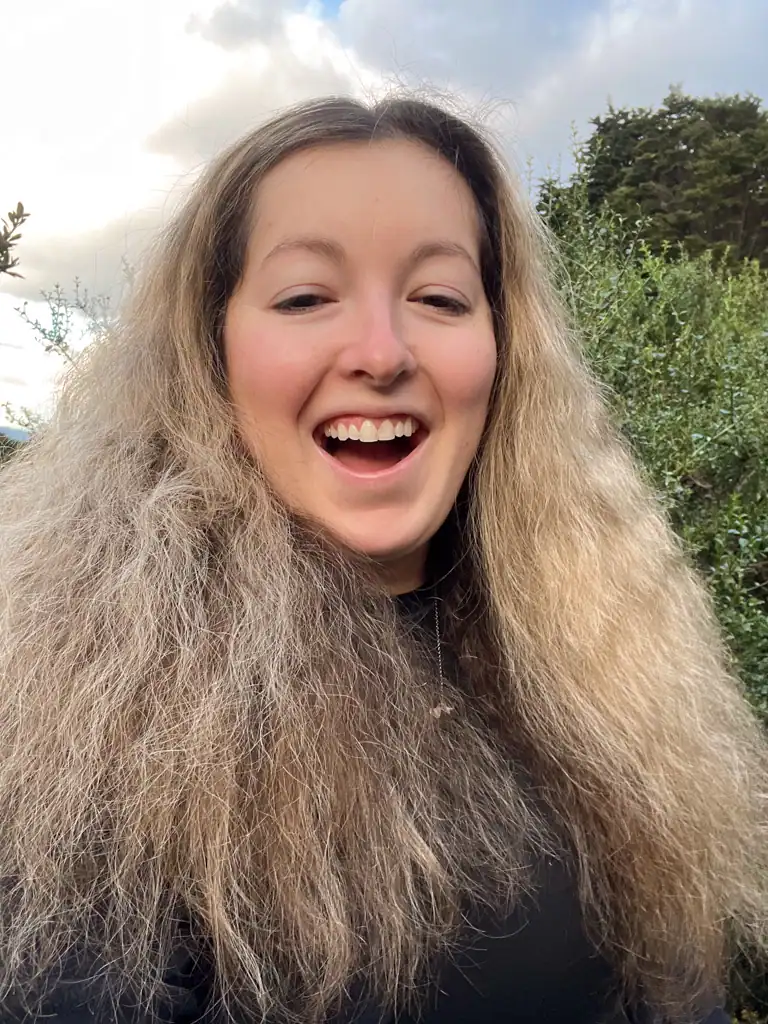
But if you are like me and want at least the feeling of being clean, bring your shampoo.
My friend said, “It’s a waste of space. You don’t need to wash your hair.”
Let me tell you, that private shower where I washed and conditioned my hair after wearing it in braids for three days was life-changing. No more itchy scalp. No more sweat buildup. I felt like I had rejoined civilization for 17 glorious minutes. So for me, it was worth the weight in my bag.
Clothing Options
I’ve said it in nearly every blog post I’ve written about Patagonia, and at least once or twice already in this one, but you must pack for Patagonia like you may experience all four seasons in one day.
Because I’m here to tell you: you might.
Sleet, rain, heavy winds, and sunshine strong enough to hand you a sunburn without apology. Plan for the best, but prepare for the worst.
So while my bag was heavy, I was thrilled to have a clean top to wear every day that could accommodate the weather for that day, whether that meant a T-shirt or a long sleeve. And when I was freezing and shivering while waiting for the sun to rise at the Towers, I was so happy to be wearing a long-sleeved workout top, fleece jacket, packable puffer jacket, raincoat, beanie, and gloves.
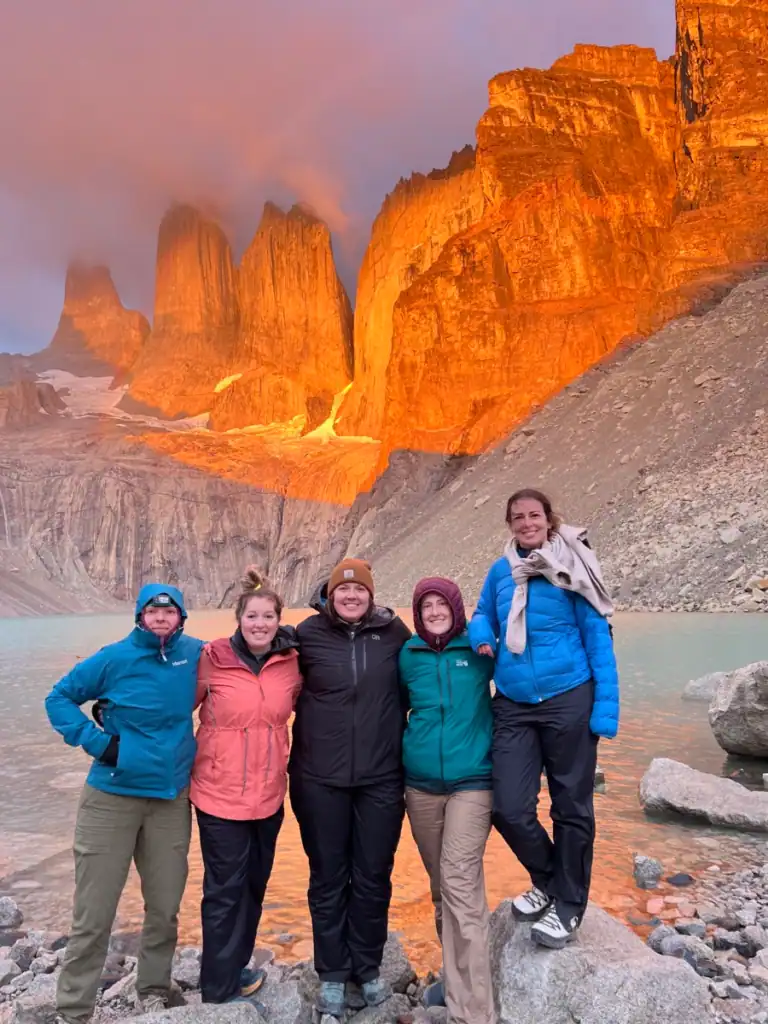
Yes, I was still cold. But can you imagine being there without all of that?
So when you begin to think about what to pack for the W-Trek in Patagonia, the answer is simple: bring layers. More layers than your optimistic self thinks you need.
Extra Curriculars
I think the overarching theme of this post is that people will tell you, “You don’t need it,” in the name of saving space and weight on your back.
But I’m here to say: if you train correctly, plan appropriately, and pack efficiently, you can trek through these Chilean mountains and eat your cake too. Bad pun fully intended.
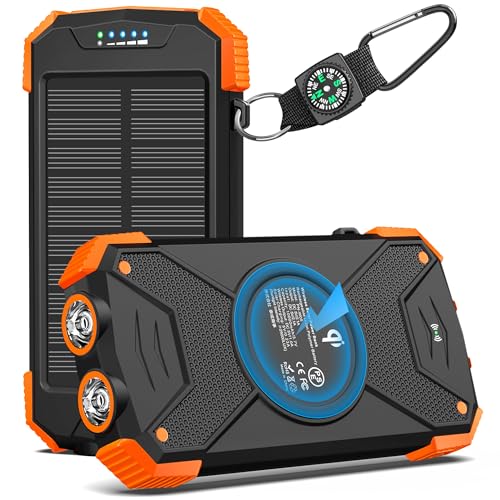
I packed my Kindle, my headphones, and a portable solar charger. Yes, going off the grid sounds amazing and relaxing in theory, but I am not a lover of silence and contemplation. So for me, bringing some extracurricular activities was important.
I listened to audiobooks, podcasts, and music while hiking. I read a few pages of a book each night before falling asleep. And I kept my phone charged not just for photo opportunities, but also for calling my husband on Wi-Fi at the refugios.
Normally, I can go five days without speaking to my spouse. But these were special circumstances.
My Patagonia Gear Recommendations


Food
Packing food for the W-Trek can be as easy or as complicated as you want to make it.
If you are flexible and don’t mind spending a little more, you can absolutely buy food in South America. Stores have everything from fresh fruit and vegetables to camping food. You may just be paying a premium for it.
If you follow a specific diet, though, it may be a little more challenging to find what you need. Traveling abroad with food is no big deal if that’s the route you want to take. I packed all my favorite protein bars, peanut butter packets, trail mix, and favorite Mountain House meals. In addition, I brought Starbucks Via packets for my morning coffee, and the girls and I shared a dried coconut non-dairy creamer.
Bringing that in my checked luggage was no big deal, and it meant I had things I knew I would actually want to eat, with the goal of adding a few fresh extras once we got to town.
Whoopsie
I can’t believe I’m saying this, but I packed way too much food.
It was done with anxiety in mind. I do fear being hungry without options, and a common question I ask myself while traveling is: where is my next meal coming from? In fact, food is such a big part of travel for me that I have an entire section of my blog dedicated to dining while traveling.
But with that said, I was overprepared.
I had Mountain House breakfasts and dinners for each day of the trek. My lunch had a full snack-platter theme. Protein bars, jerky, pickles, apples, peanut butter, trail mix, nuts, and more. While I am a hungry gal, I left the trek with so much extra food because we didn’t really stop for full lunch breaks while hiking. Maybe fifteen minutes here or there to eat an apple or some jerky, but otherwise we saved a lot of our eating for meals at the start and end of the day.
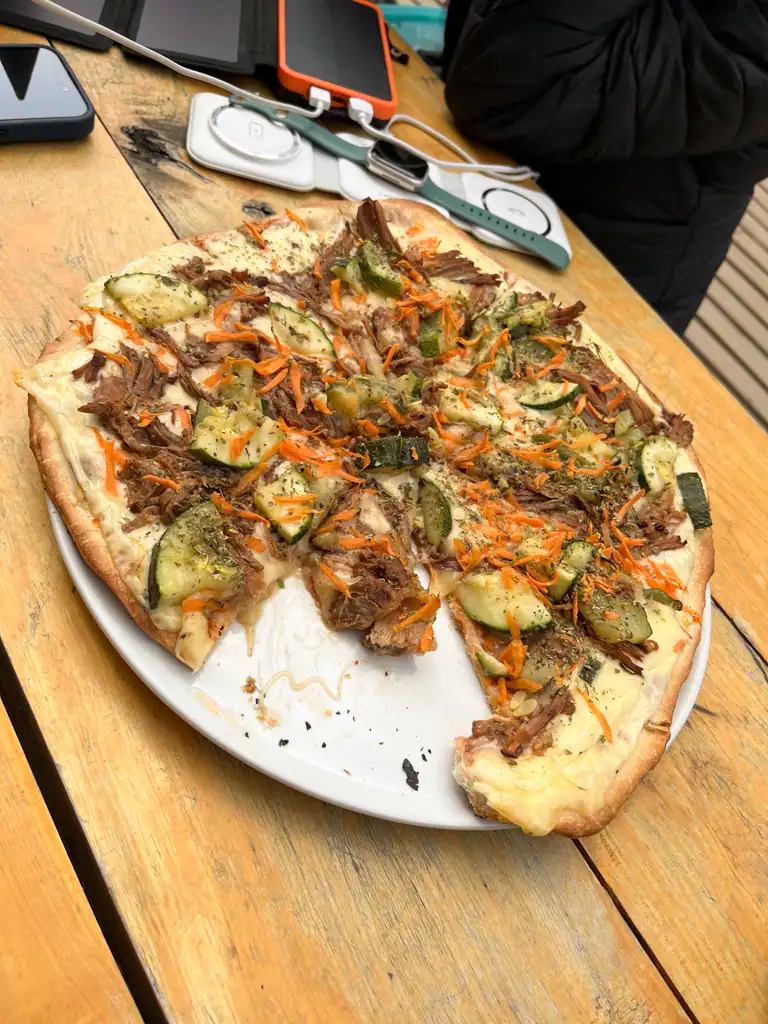
The other factor is that most of the refugios have purchasable snacks and meals. So I would opt for packing less and, if you find yourself in a bind or hungrier than expected, grab a weird zucchini pizza at Cuernos or a bag of Doritos at Paine Grande to fill the void.
What Went in My Suitcase
While I definitely usually ride with the “flexibility is key” mindset when packing clothes for a trip, because a girl needs options, this was not one of those trips.
Outfits needed to be planned out. Space needed to be conserved. And I had to be super intentional about what I was bringing.
After hiking the W-Trek, we still had hikes and visits in El Calafate and El Chaltén to dress ourselves for. We booked a place in El Calafate that had laundry, which was essential, and were able to basically reset our W-Trek clothes and wear them again for future hikes, hangs, and travel days.
I specifically packed what I’d call my “in-between clothes” in my suitcase. Comfortable clothes for our drives, cute clothes for our days in Santiago, and casual clothes for the days between hikes in El Chaltén and El Calafate. I already had my outerwear layers, which made warmth and comfort easy moving forward.
I brought only one other pair of shoes, these comfortable Everlane “band shoes”, as my husband so lovingly calls them, for strolling through towns and exploring Santiago.
What I’d Change Next Time
I can’t help but toot my own horn here, but clothing-wise, I think I packed perfectly.
While I didn’t really need the second cute outfit for Santiago, it would have been sad for my friend Kate, who wore the skirt and top I didn’t end up wearing, if I hadn’t brought it along. And while I never wore the one pair of hiking shorts I packed, if it had been blazing hot one day on the trek, I would have been sad to be sweating and not letting my legs see the sun (it was February after all and I did live in the PNW).
I think it’s important to be as prepared as possible for the W or O treks, and if that means a couple of unused items or an extra few ounces because you brought shampoo to deal with your Hagrid mane, then so be it.
As I said above, though, the food was overkill and the propane was ultimately unnecessary. If you want to read more about what I would change about hiking the W-Trek, check out my post here.
The Bottom Line
Packing for three weeks can be hard. Packing for three weeks of backpacking and hiking in rural South America, plus city visits and long plane rides? Brutal.
But with your type-A, neurotic Capricorn bestie on your side, that would be me, you can absolutely pack efficiently and still bring the items you really care about.
While there are definitely things I would do better next time when packing for the W-Trek and the following two weeks in Chile and Argentina, I think I accomplished what I wanted packing-wise: lots of options and feeling fully prepared.
I’m always happy to advise travelers on anything Patagonia-related, especially if it includes packing. DM me on Instagram or shoot me an email at Jess@updatelater.com.
If you want to read a day-to-day breakdown of my W-trek adventure, check out day 1 here!