This post may contain affiliate links. If you purchase through these links, I may earn a small commission at no extra cost to you. Thanks for supporting my site! See our privacy policy for more information.
I like to think of Morocco as the perfect little appetizer to exploring Africa. While parts of the country still fall into the “developing” country category, most of the places you’ll visit are surprisingly approachable and easy to navigate. You can spend your time in Morocco checking off historic sights like the Ben Youssef Madrasa in Marrakech, learning about Islamic culture through stunning mosques, adventuring in the mountains (yes, the ones that get snow in winter), and riding camels through the Sahara in the south.
The contrasts are what make Morocco so compelling. One moment you’re weaving through narrow, rustic alleyways in the souks, and the next you’re strolling pristine, palm-lined streets in Rabat. It’s a country of opposites, and that tension is exactly what makes the adventure feel exciting and alive. Keep reading for my Morocco travel guide and everything you should know before you go.


Setting Expectations
One of the best parts of traveling is stepping into a culture that already exists and learning how to move within it. Whether that’s the nonstop hustle of New York City or a place where daily life pauses for prayer, meals, and family, you’re being dropped into someone else’s rhythm. That’s the whole point.
That said, expectations matter. Morocco is not London, Paris, or anywhere else in Western Europe, and you shouldn’t arrive expecting it to operate the same way. Things may run on a different schedule, conveniences may look different, and logic (at least your logic) may not always apply. If you’re using this guide to plan your trip, temper what you think Morocco is about and leave room for what it actually is. The more flexible you are, the better experience you’ll have.
Language FYI
The primary language spoken in Morocco is Arabic, and a large portion of the population also speaks Berber, an indigenous language with several regional dialects. Because of French colonization in the 19th century, French is widely spoken and used throughout the country.
With tourism increasing every year, English is becoming more common, especially in major cities. Some locals even believe that French will eventually be phased out in favor of English over the next few decades. That said, most street signs, menus, official information, and place names are still written in French and Arabic.

I speak decent French, but honestly didn’t find many opportunities to use it. In some cases people didn’t speak French at all, and in others they switched to English after a few words. Just to add an extra layer of confusion, if you spend time in the north, especially in places like Chefchaouen, you may hear a lot of Spanish. This comes from Morocco’s long Andalusian connection with Spain. At its narrowest point, Spain and Morocco are only 14 kilometers apart across the Strait of Gibraltar, and their shared history dates back to 711.
Moral of the story: you’ll be totally fine speaking English in many parts of Morocco. Once you venture into smaller towns or rural areas, communication can be more challenging. If you’re planning to drive, note that many street and highway signs are only in French and/or Arabic.
Who Should Go to Morocco
Morocco is an incredible destination, but it’s not for everyone, and that’s okay. Here’s who I think will genuinely enjoy a trip to Morocco.
If you want an easy entry point into exploring Africa, Morocco is a great choice. The major cities are very tourist-friendly, and people are generally accommodating and welcoming. There’s also a huge variety of tour options, from guided walks through the souks to multi-day desert trips, which makes logistics much easier if you’re feeling overwhelmed by planning.
The proximity to Europe is a major bonus. Yes, it’s a long haul from the US, but Morocco is incredibly easy to tack onto a European trip. Marrakech is about a two-hour flight from Spain or France, making it a great long weekend destination or a natural extension of a Europe itinerary.


If you love experiencing new cultures, food, and ways of life, Morocco will absolutely light you up. This was my favorite part of the trip. I’m an easily impressed, lifelong learner who nerds out over history, religion, and the small details that make a place what it is. I loved having guides in Marrakech, Fes, and Volubilis, learning about Greek and Roman gods, Islamic traditions, art, and daily life.
Morocco is also a great destination if you’re easygoing and adaptable. Plans may change due to cultural traditions, road closures, or shifting schedules. While that can happen anywhere, flexibility really matters here. If you’re dead set on eating at a specific restaurant at a specific time, just know it might be closed for prayer, especially on Fridays around lunchtime.
If budget is a concern, Morocco is very manageable once you arrive. Flights from the US can be expensive, but daily costs are reasonable. Shopping in the souks can add up quickly, but in general a very nice dinner might cost around $50, and the best lunch I had was under $5. Tipping will take up part of your budget, but it doesn’t need to be excessive. I’ll break that down later in this guide.


How Long to Spend in Morocco
You could absolutely hop over to Marrakech for a long weekend and feel like you got a taste of Morocco. Or you could spend a full month exploring cities, deserts, mountains, and coastlines. I spent 10 days in Morocco, visited five major cities, went into the Sahara, and made about 15 additional stops along the way. Even then, I missed popular places like Tangier and Essaouira.
Before deciding how long to stay, take a hard look at your Morocco hopes and dreams. While parts of the country are connected by fast trains, most travel between regions is done by car. If you want to see a lot, expect to spend several hours a day driving.
Here’s a rough breakdown of timing:
- Imperial Cities (Marrakech, Fes, Rabat, Meknes): 7–8 days
- Imperial Cities + Sahara Desert: 8–10 days
- Imperial Cities + Sahara + a coastal town (Essaouira, Tangier): 10–12 days
- All of the above plus Casablanca, Ifrane, Atlas Mountains, Chefchaouen: 12–18 days
The TL;DR
If you’re thinking, damn, I need two and a half weeks to see Morocco, you’re not wrong. A trip to the Sahara alone will eat up about two full days of driving, eight hours or more each way.
Personally, I think Morocco is worth the hit to your PTO bank. Realistically, a return trip isn’t super likely for most people, and if you rush through destinations you’ll spend more time in transit than actually experiencing them. Slow travel works beautifully in Morocco. You’ll have more energy, enjoy yourself more, and honestly, no one wants to live in a car that much anyway.
Where to Visit in Morocco
Let’s talk about where you should actually visit in Morocco and why. This section is meant to help you narrow your focus and build an itinerary that makes sense for your travel style, not just one that looks good on Instagram.
Imperial Cities
Rabat is the capital of Morocco, and yes, you can absolutely tell. This is home to the King of Morocco, and while you can’t go inside the palace, you can see the exterior, gardens, and grounds, along with the impressive number of guards protecting the complex. The city itself feels orderly and polished, with pristine streets, a beautiful kasbah overlooking the water, the iconic Hassan Tower, and the smaller sister city of Salé sitting just across the river.
Marrakech is the tourist capital of Morocco and the most commonly visited city in the country. It’s an excellent starting point for first-time visitors thanks to the sheer number of sights, gardens, riads, and experiences packed into one place. Add in the massive souk (where you will absolutely get lost at least once) and Marrakech becomes an essential stop on almost any Moroccan itinerary.
While many people assume they’ll just “do Marrakech,” Fes has so much to offer. From its ancient city walls to the traditional leather tanneries and intricate tilework, Fes feels deeply historical and lived-in. Fun fact: one of the vats in the tanneries is filled with pigeon poop. Its acidity helps soften the leather. Disgusting? Yes. Fascinating? Also yes.
Meknes is a city you may not have heard of yet, and that’s part of the appeal. This UNESCO World Heritage Site is quieter and feels more authentic compared to the other imperial cities. It sees fewer tourists and offers a slower pace, making it a great contrast stop. While you’re here, don’t miss the nearby ancient ruins of Volubilis, they’re absolutely worth the detour.
Coastal Stops
Essaouira is a fantastic coastal stop, especially for first-time visitors who want a break from the intensity of Morocco’s medinas. It’s well developed but still charming, with a historic old town, relaxed vibe, and easy beach access. While the wind can make it less ideal for sunbathing and swimming, it’s perfect for kitesurfing and windsurfing. If you’re looking to decompress after Fes or Marrakech, Essaouira is your girl.
Agadir is a totally different coastal experience. It’s large, modern, and very developed, ideal if you’re craving a resort-style stay. The downtown area is filled with contemporary cafés, restaurants, and shopping, and the main beach stretches for about 12 kilometers, so there’s plenty of space to spread out.
Al Hoceima, located in northern Morocco along the Mediterranean, is known for its isolated beaches, views of the Rif Mountains, and reputation for being both clean and safe. It’s quieter and less touristy, with colonial-inspired architecture in town and stunning beach stops in between.
Tangier is… a mixed bag. Some people love it, others really don’t. The infrastructure isn’t great, which can make getting around feel frustrating and time-consuming. That said, its proximity to Spain makes it an interesting option for day trips or short stays, especially if you’re hopping between Europe and Africa.
Ready to Explore? Book Here ↓
Mountains & Desert
You would be seriously remiss not to stick your toes in the dunes of the Sahara while visiting Morocco. Yes, the drive to Merzouga or Zagora from Marrakech is long, but when else are you going to casually say you went to the Sahara? The sunsets and sunrises are unreal, and a camel ride through the desert is a true once-in-a-lifetime experience. Spend a night glamping, eat dinner under the stars, bada bing bada boom, you did it.
Ifrane, located in the Atlas Mountains, is often called “Little Switzerland,” and honestly, it earns the nickname. With alpine-style architecture, ski opportunities, forests, and waterfalls, it feels wildly out of place in the best way possible. Go for a hike, ski if that’s your thing, and keep an eye out for Barbary macaque monkeys in Ifrane National Park.
Stops Along the Way
Not every destination needs an overnight stay. Some places are perfect for hopping out of the car, soaking it in, and moving on. These stops are worth it for their beauty and because they’re uniquely Moroccan:
- Ouzoud Falls: stunning waterfalls near Marrakech
- Dades Gorge: a rugged, rock-lined gorge carved by the Dades River—think Zion National Park vibes
- Aït Ben Haddou: a famous kasbah used as a filming location for Game of Thrones and Gladiator
- Dades Valley: a scenic drive through winding mountain roads and dramatic red rock landscapes
- Volubilis: ancient Roman ruins with remarkably preserved mosaics that will fully transport you out of Morocco


Getting Around
There are plenty of ways to explore Morocco, and the best option depends on your itinerary and comfort level.
- Trains (ONCF): Reliable and efficient for major routes. There are only a few “fast” trains, but they’re great for city-to-city travel. Splurge for first class on longer rides.
- Coaches (CTM and Supratours): A more expansive option than trains. These buses are air-conditioned, practical, and inexpensive if booked in advance and they’ll get you where the train won’t.
- Car: Highways and main roads are generally in good shape, but rural roads can be rough. Watch for animals, don’t speed unless you enjoy chatting with the police, and drive cautiously. Hiring a driver is often worth the peace of mind.
- Taxi: Ideal for short distances within cities. Close your eyes and hope for the best, it’s chaotic, mildly terrifying, but usually safe in a darkly comedic way. Always ask them to start the meter.
- Guides: Guided tours are great for both short excursions and long-haul trips. You can do just the desert or, like I did, a full 10-day guided exploration.
- Day Trips: Morocco is prime for day trips. From Marrakech alone you can reach Ouzoud Falls, Lake Takerkoust, Essaouira, and the Atlas Mountains.
Ready to Explore? Book Here ↓
What Every Morocco Itinerary Should Include
If this is your first time in Morocco, there are a few essential experiences you should prioritize. Rather than listing city-specific sights (because there will be overlap), let’s talk about the big-picture musts.
Souks
Every city has a souk. Some are small and charming, while others, like those in Marrakech and Fes, can swallow hours of your life. You’ll find everything from slippers and leather jackets to silver lamps, rugs, spices, skincare, and traditional clothing. Even if shopping isn’t your thing, the chaos is worth experiencing. The sights, sounds, smells, and sheer overwhelm are part of the magic.
My one complaint: be aware and prepared while shopping to get the time share presentation. You know the ones. Where you sit patiently as someone pitches you wha they have to offer and have a seriously sour attitude when you decline. This is a bit like shopping in the souks. The artisans in the souks are proud of what they have made and listening to their schpiel is part of the process. Make sure to leave a few Dirhams for a tip if you don’t purchase anything. Whether you wanted it or not, sometimes its best to just accept it and move on.


Mosques
Non-Muslims can’t enter most mosques in Morocco, but the exteriors alone are fascinating. Pay attention to architectural details, entrances, and the symbolism, like the structures on top of mosques that once held green flags representing the Prophet on Fridays and just so happen to look like gallows. You can often peek inside from the doorway, and the Hassan II Mosque in Casablanca is an absolute must.
Natural Wonders
Morocco is packed with natural beauty, but you don’t need to see everything. Aim for one or two major experiences: the dunes of Erg Chebbi or Erg Chigaga, waterfalls like Ouzoud, mountain ranges such as the High Atlas or Rif Mountains, and beaches like Plage Sauvage or Legzira.

Hammam
A hammam is equal parts cultural ritual and spa experience. Traditionally, locals would gather in public hammams to bathe, socialize, and scrub each other clean. Today, you’ll find options ranging from public to very private. Expect steam, soaking, and an aggressively thorough scrub with Moroccan black soap that leaves your skin baby-soft and your soul slightly shaken.
The Desert
Yes, I mentioned it already (too many times) but it deserves repeating. A Sahara trek is worth the effort. Most tours include stops in the Atlas Mountains, film studios, and kasbahs used in famous movies before heading into the desert. Once there, it’s all camel rides, chic desert camps, fires, traditional music, and an experience unlike anything else.
Riads
Sure, Morocco has Western-style hotels, but do yourself a favor and stay in a riad. These were once homes of traders and wealthy merchants, many of which have been converted into stunning guesthouses. Rooms are typically on the upper floors, while the ground level features soaring ceilings, intricate mosaics, fountains, and sometimes a plunge pool. Most riads serve a traditional Moroccan breakfast, and honestly, they’re an experience in themselves.

Rooftops
Morocco loves a rooftop terrace, and so should you. Many restaurants and cafés offer panoramic views over the city, so take advantage. There is nothing better than eating lunch in the sunshine while looking out over a sea of rooftops, minarets, and medinas.
Moroccan Architecture
Morocco’s architecture tells its history. The country has been invaded, colonized, and influenced by Spain, Andalusia, Rome, and the Middle East, with Islam shaping much of its artistic expression. You’ll see everything from hand-carved Arabic script from the Quran to centuries-old woodwork and intricate tile patterns. Standout examples include the Mausoleum of King Mohammed V, Bahia Palace, royal palaces in Rabat, the clay structures of Aït Ben Haddou, and the Roman ruins of Volubilis—just to name a few.
Dining
I have to say, my favorite meal in Morocco was not what you’d expect. It was a tiny, hole-in-the-wall spot tucked inside the medina in Fes. No sign, no frills, just grilled meats on skewers, a pita-style bread pocket, and a spicy chili sauce that meant business. You paid for how much you ate. I had 20 dirhams’ worth of chicken (about $2), which was more than enough. My husband went with the kefta, juicy, flavorful, and honestly perfect.
We sat at a small metal table just a few feet from where the guy was grilling our meat. A cat parked itself at our feet, patiently waiting for scraps among the wood shavings covering the floor. From our stools, we watched the world go by: locals hauling propane tanks and wheelbarrows piled high with ingredients, tourists snapping photos, everyone soaking in the sights, sounds, and smells of the medina.
It was cultural. It was authentic. The food was simple, no-nonsense, and phenomenal. The service was warm and effortless. I could have kissed the owner for the entire experience. And in case I didn’t say it clearly enough, the food was impeccable.


What You’ll Find in Morocco
Most riads include breakfast with your stay, and even if you’re usually a black-coffee-and-go kind of person, indulge in the traditional Moroccan breakfast. It typically starts with coffee or mint tea, followed by fresh fruit, an assortment of breads with jams and honey, and made-to-order eggs or omelets. It’s a generous, comforting way to start the day.
Lunch is a follow-your-heart situation. Find a cozy café, or be brave and grab street food. For dinner, you can eat at your riad or head out into the city. Grab a table at a panoramic rooftop or a well-rated local spot and lean into Moroccan staples like tagine, couscous, and brochettes (skewers). If you have your heart set on somewhere specific, reservations can help, but I often made dinner plans just 15 minutes before eating without issue. Dining in Morocco is generally relaxed and straightforward.
Keep reading for tipping info, it matters here.
Tea
Tea is the backbone of Moroccan hospitality. You don’t need to seek it out; it will find you. It’s served while rug shopping, while waiting, and sometimes just because. Ask for it without sugar if that’s your preference, it’s great either way. When in Morocco, drink the tea. Often.

Helpful Hints
Morocco is a sensory overload in the best and worst ways, colors, noise, movement, language barriers, religious customs, cultural norms. It can feel like a lot. These tips will help you stay grounded.
Tipping
This was surprisingly confusing when we arrived. We tipped when we didn’t need to and forgot when we absolutely should have. Tipping is customary in Morocco because many workers rely on it to supplement very low wages. Ignore anyone telling you tipping isn’t necessary.
Also: cash is king. Expecting to rely on cards is… optimistic. Plan to carry cash, more than you think, and use small purchases to build up change for tips.
Here’s a quick, practical breakdown:
- Food stalls: 1–2 dirhams
- Restaurants: ~10% of the bill
- Taxis: 5–10 dirhams or round up (and always confirm the meter is running)
- Multi-day tour driver: 100 dirhams per day
- Single-day tour driver: 200 dirhams
- Unofficial guides (like at the Fes tanneries): 5–10 dirhams
- Street performers (especially for photos): 10–20 dirhams
- Public restrooms: 1–3 dirhams
- Help with bags at riads/hotels: 5 dirhams
- Housekeeping: 10–20 dirhams
- Parking attendants: 2–5 dirhams
- Rug shop attendants: 100–200 dirhams total if you’re shown rugs
Tip well for good service, adjust when needed, and don’t be surprised if some people ask for tips directly or refuse them. When in doubt, be generous if the service was solid.


Maps
Google Maps is my ride-or-die, but even it struggles in Moroccan souks. Expect to get lost. Do not panic. There is always a way out. Ask the police or a shop owner for help, not random people offering to guide you.
Download offline maps, because service is spotty in the medinas. And if you’re in Marrakech, make sure you know what to do when you get to Jemaa el-Fnaa square; most souks eventually funnel you there.
Bargaining
Bargaining is part of the deal in the souks. While many guides suggest starting at 50% of the asking price, I recommend keeping a respectful number in mind. Not every shop owner is selling cheap junk at inflated tourist prices.
Convert the cost into your home currency. If it’s more than you’d reasonably pay, start negotiating. Some owners may get offended or pushy, stay calm, pay only what you’re comfortable with and be willing to walk away.
We visited two incredible rug shops and absolutely overpaid at both. And you know what? I don’t regret it. I have three stunning, handmade Moroccan rugs, detailed care instructions, and direct contact info for the shops. I paid for quality and service, and I’m okay with that trade-off.
Moroccan Scams (and How to Avoid Them)
I don’t want to paint Morocco negatively, but scams exist. If you want to read how my phone was stolen in Morocco and how to keep your phone and important belongings safe while traveling, you can read about it here. Here’s how to sidestep them:
- “Guides”: If someone offers help because you look lost, say “Choukran” (thank you) and keep walking. Following them = expected tip + potential harassment. Ask shop owners for directions instead.
- Souk shopping: Ask your riad for reputable shops or hire a guide. Not everything labeled “handmade” actually is. Fake argan oil and imitation saffron are common.
- “Official” guides: Lanyards and badges don’t mean legitimacy. Firmly decline unless you’ve booked in advance.
- Pickpockets: Learn from my mistakes. Stay alert.
- Henna: Some women will “accidentally” spill henna and then pressure you into overpriced designs. Agree on a price beforehand, and only accept dark green/brown henna (black can be harmful).
- Hashish dealers: Don’t do drugs in a foreign country just because its there. It’s stupid.
Emergency Info (Because It Matters)
Once a nurse, always a nurse, emergency info is non-negotiable:
- Police: 190 or 112
- Police (outside cities): 177
- Ambulance: 150
- Fire department: 15
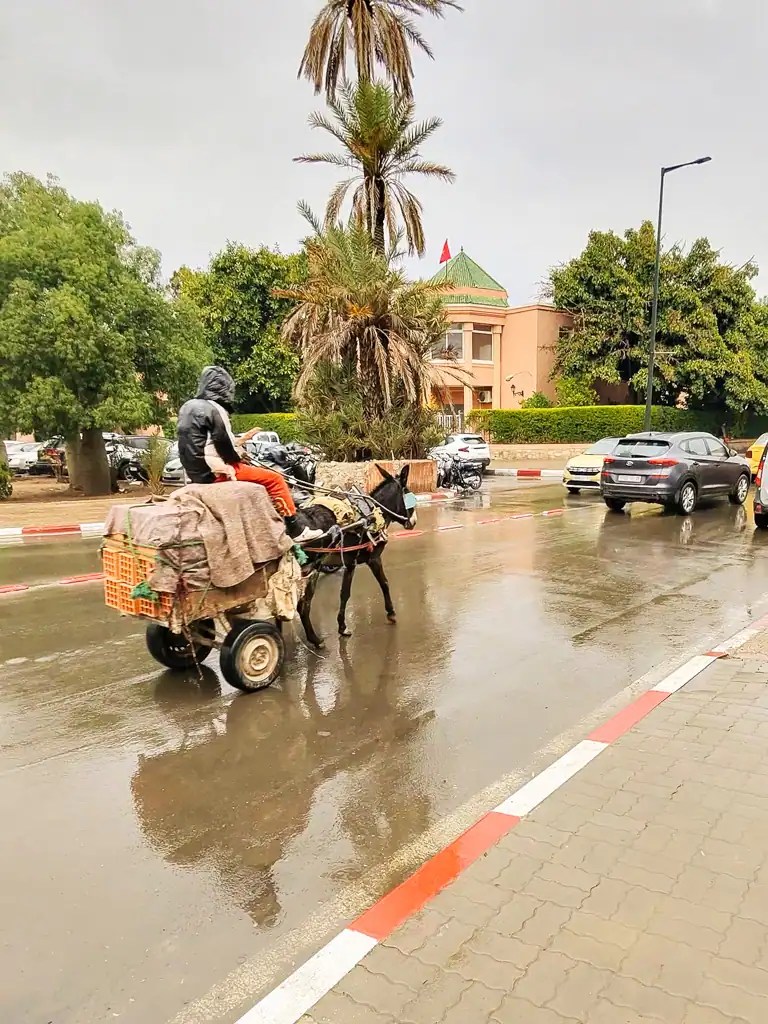
Fun fact: while wandering the narrow alleyways of the Fes medina, I asked our guide what happens if someone has a heart attack in their home between these thin roads. The streets are barely wide enough to walk through. His answer? Donkeys. They use donkeys to carry people out. Whatever works.

When to Visit Morocco
There are limited windows when Morocco is truly enjoyable, and crowds come with them. Do not visit in summer. Temperatures can hit 110°F+, and even with air conditioning, it’s brutal.
Spring and late fall are ideal: warm but manageable, with plenty of sun. Winter is doable, but expect rain and even snow, which can make medinas muddy and unpleasant.
I always preach shoulder season travel, but with Morocco, accept that crowds are part of the deal during the best weather.
The Bottom Line
I hope this Morocco guide made you feel more confident planning your trip and knowing what to expect once you’re there. Morocco is layered, chaotic, beautiful, frustrating, and unforgettable all at once.