This post may contain affiliate links. If you purchase through these links, I may earn a small commission at no extra cost to you. Thanks for supporting my site! See our privacy policy for more information.
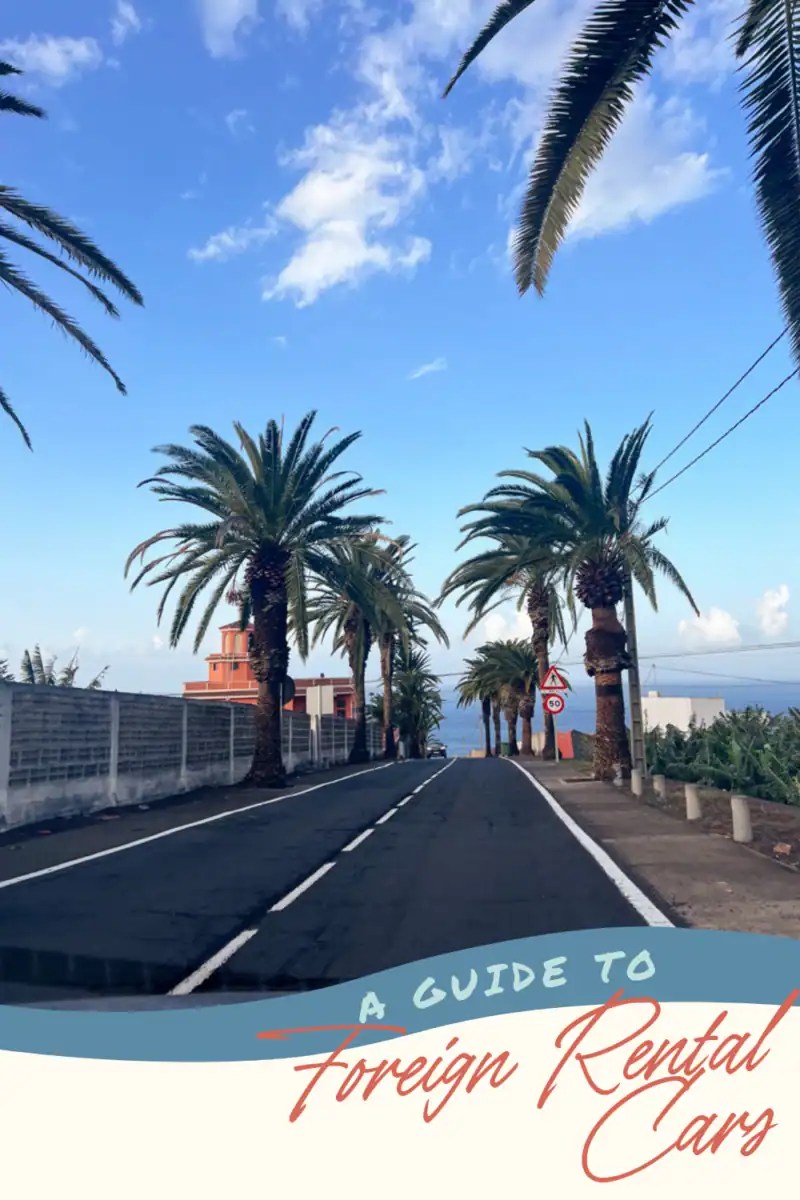
I am such a big proponent of car rentals. Maybe it’s because my aspirational travel has always led me off the main roads. But now I can say I’ve done it all, driven with the wild drivers and seemingly zero rules in Italy, zipped along the Autobahn in Germany, wound my way through Tenerife’s mountain roads, braved the Road to Hana in Hawaii, and navigated the stone-walled countryside lanes of Ireland and England.
Some of the places I’ve loved most were only accessible with a rental car. Having my own set of wheels meant freedom to explore, skip the crowds, and build an itinerary on my own terms. I’m so glad I never doubted my ability to drive in a foreign country, because it has taken me to some spectacular spots.
And if I can do it, so can you!
Here are my best tips for renting a car abroad, getting insurance right, and tackling the challenge of driving on the left side of the road.


Car Insurance 101
Liability vs. Collision Insurance
Quick refresher:
- Liability insurance covers damage to other people, cars, and property. It’s usually required by law.
- Collision insurance covers damage to your rental car if you’re in an accident or deal with vandalism. Sometimes windshield and tire damage isn’t included, so read carefully.
Insurance Recommendations
In the United States, your personal car insurance often covers both liability and collision. But many providers don’t extend liability coverage internationally. The good news? In much of Europe, liability is mandatory and automatically included in the rental price.
Collision insurance, however, is often subject to a deductible, anywhere from $500 to $1500 depending on the company and location. You can usually upgrade your coverage and pay a daily premium to reduce or eliminate that deductible.
My recommendation: pay for the peace of mind. In Tenerife, I backed into a small pole while reversing out of a tiny lot. Because I had upgraded coverage, the rental company didn’t charge me a dime. No stress, no begging for forgiveness. Worth it.
Bottom line: read the rental agreement carefully and stick to reputable companies. I personally love Enterprise and National. While they may cost a bit more upfront, their customer service and transparency are worth it. If you’ve never heard of a company, no matter how good the deal looks, skip it or read up on others’ experiences before booking.
Take Advantage of Benefits
If you work for a larger company, check whether your employer has partnerships with rental agencies. Over the years, my husband’s corporate benefits have given us discounted rates and even free upgraded insurance.
Also, check your travel credit cards. Some provide rental insurance coverage, but read the fine print carefully. For example, Ireland has strict rules and many credit cards exclude coverage there. I was relieved when I discovered my Capital One Venture card had no restrictions.
Tip:
3rd party booking websites are great when they can score you a discount on a hotel or experience but I would absolutely avoid in when renting a car. Instead book directly with the rental car company. If something were to happen, although there may be protections offered through the 3rd party, you also have layers of different people to navigate through to find a solution. Ultimately, it leaves a lot of opportunity for one of the parties to pass blame.


International Driver’s License: Do You Really Need One?
When I first started driving abroad, I thought an International Driving Permit (IDP) was a must. The truth? It’s mostly about overcoming language barriers.
The IDP is recognized in over 150 countries and basically translates your license into multiple languages. I’ve been asked for it only once or twice, since most of the countries I’ve driven in use the same alphabet. Still, if you’re traveling somewhere like Greece, it’s a smart idea to have one.
The easiest ways to get an IDP:
- AAA: Quick and easy. Just bring an application and passport photos.
- E-ITA: An online option. They’ll send a digital copy right away and mail the card later. I used this website last minute to rent a car to drive to Frigiliana in Spain. It was worth the cost and when I arrived back to my apartment in France the card was waiting for me.
If you plan ahead, you’ll have the hard copy in hand before your trip.
Ready to Plan? Get Your Destination Guide ↓


Planning Your Route
A little prep goes a long way. Here’s what to double-check before you go:
- Tolls: Does your car come with an electronic toll pass, or will you need to pay cash as you go?
- Travel Time: Pay close attention not just to the mileage but time. It’s only 20 miles but says it will take an hour to drive it? Usually you are looking at a road that may be windy, unpaved, one way traffic only or closed with construction. Those details are important to investigate. Our maps navigated us down an extremely rocky, unpaved road while driving through Argentina and the longer we drove on it the farther away our ETA got.
- Navigation: Google Maps is my go-to. It only failed me once in Germany when a surprise road closure forced us onto farm lanes but still made it back to Munich on time.
- Construction or hazards: Check your route close to departure to catch closures, construction, or even small fires (yes, that’s happened to me twice).
- Border crossings: Some regions require extra permits or paperwork. In Patagonia, for example, crossing from Chile to Argentina required a special document from the rental company and wasn’t something that could be completed in the moment. Always confirm with your provider.
- Learn local signs: A few minutes of research can save a lot of stress.
Pro tip: if your trip doesn’t loop back, you can usually return your car at a different location for a small fee.
Driving on the left
I have driven on the left twice now, and it has been successful. Here are some absolute no brainers, but were helpful to me when I was driving opposite.
- Use your side mirrors (lol). As someone who struggles a little with spatial awareness in a car, when I was driving left and out of my comfort zone I used my side mirrors frequently to evaluate where I was spatially in the lane. My husband saying I was too far on the midline wasn’t helpful until I looked in my mirror and realized I had a ton of space on my other side.
- Having a solid co-pilot is my number one recommendation for driving on the left, at least until you feel confident. Having a co-pilot who stays awake (the most important!) and also calls out those little reminders is worth its weight in gold. My husband will remind me in busy intersections “turning left into the close lane” or “turning right into the far lane” or even play-by-play directions through the giant traffic circles.
- I’ve done it in both England and Ireland, and while England was fairly manageable, Ireland’s roads were much trickier. Many routes take you off highways and onto narrow countryside lanes that barely fit two cars. Sometimes you’ll pull into a tiny shoulder (or a hedge!) to let someone pass, and behind those beautiful flower-lined roads, you’ll often find hidden stone walls just waiting to scratch your car. My best advice? Get the extra insurance, stay alert, and give yourself grace.
The Bottom Line
Driving internationally can feel intimidating at first, but with preparation, it becomes one of the best ways to travel. Renting a car gives you the freedom to explore hidden gems, skip the rigid tour schedules, and create adventures that are uniquely your own.
I’ve driven in multiple countries without major mishaps (knock on wood), and every experience has made me a more confident traveler. If nothing else, I hope this guide prepares you to grab the keys and hit the road on your next trip abroad.
Pin this post for your next trip! ↓